 Skip to content
Search engine marketing small business has become a crucial tool for entrepreneurs aiming to boost their visibility and attract more customers. SEM helps small businesses lift their presence right where potential customers are searching — on search engines like Google and Bing. Here’s a quick rundown of what SEM can do for your small business:
- Increased Visibility: Show up at the top of search results and get noticed instantly.
- Targeted Advertising: Reach the right audience by targeting specific keywords related to your business.
- Measurable ROI: Track every penny to see what’s working and refine your strategy accordingly.
In the digital world, the benefits of search engine marketing small business cannot be overstated. It can set the stage for growth, allowing your business to effectively compete with larger companies.
My name is Josh Hook. With nearly a decade of experience in elevating the online presence of small to medium-sized businesses, I have assisted countless companies in leveraging search engine marketing small business strategies to improve their branding and achieve their digital goals.
Understanding Search Engine Marketing for Small Businesses
Search engine marketing (SEM) is a powerful tool for small businesses. It helps them get noticed by potential customers on search engines like Google and Bing. Let’s break down the basics of SEM and see how it can benefit your business.
SEM Basics
At its core, SEM involves using paid search techniques to increase your business’s visibility. This means you pay to have your ads appear when someone searches for keywords related to your products or services. It’s a way to ensure your business is seen by people who are actively looking for what you offer.
Paid Search and PPC
One of the main components of SEM is pay-per-click (PPC) advertising. With PPC, you only pay when someone clicks on your ad. This makes it a cost-effective way to drive traffic to your website. PPC allows you to control your budget, target specific audiences, and measure the success of your campaigns easily.
Keyword Bidding
To make the most of SEM, you need to understand keyword bidding. This is the process of choosing and bidding on keywords that potential customers might use when searching for your products or services. The better your keywords, the more likely it is your ads will appear in search results.
Here’s how keyword bidding works:
- Select Keywords: Choose relevant keywords for your business.
- Set Bids: Decide how much you’re willing to pay for each click.
- Monitor and Adjust: Keep an eye on performance and make adjustments as needed.
In SEM, mastering keyword bidding is crucial. It ensures your ads reach the right people at the right time.
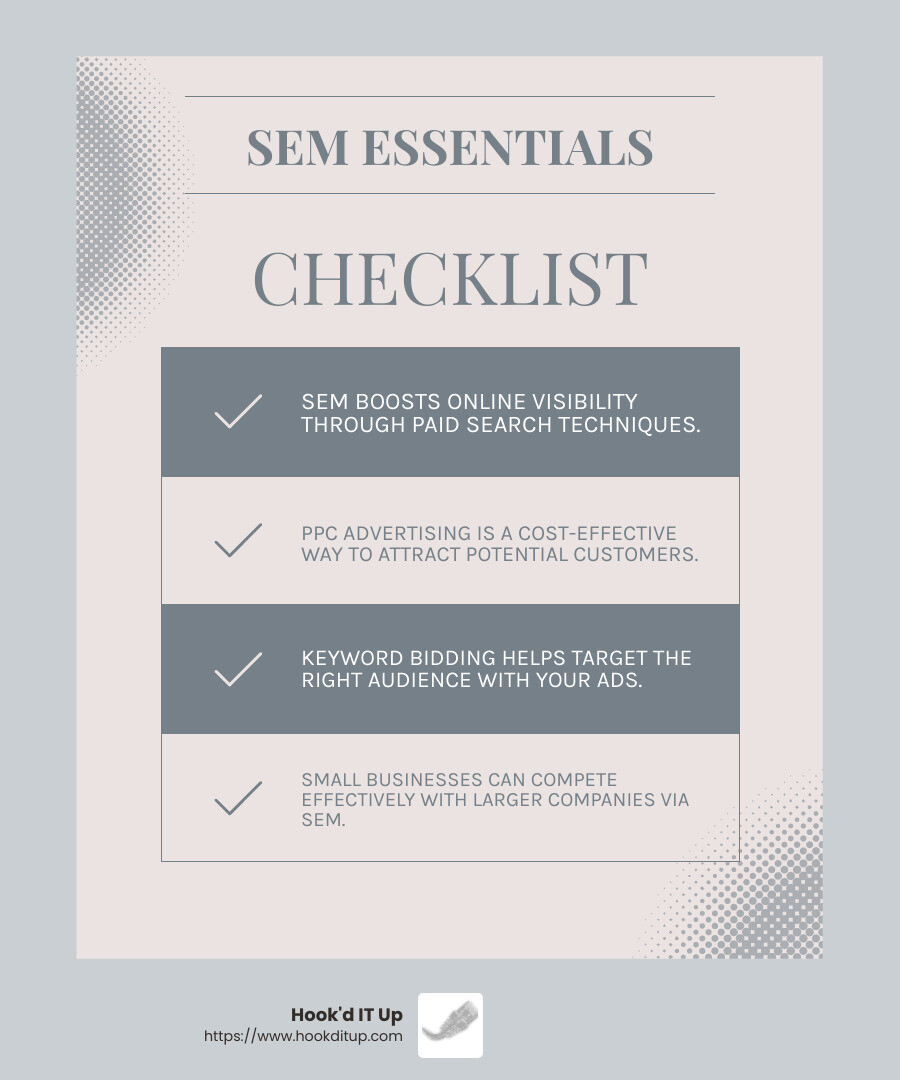
By leveraging SEM, small businesses can compete with larger companies. It allows them to target specific audiences, manage their advertising budgets, and measure their return on investment. As a small business owner, understanding and implementing SEM strategies can lift your business’s visibility and drive growth.
Crafting an Effective SEM Strategy
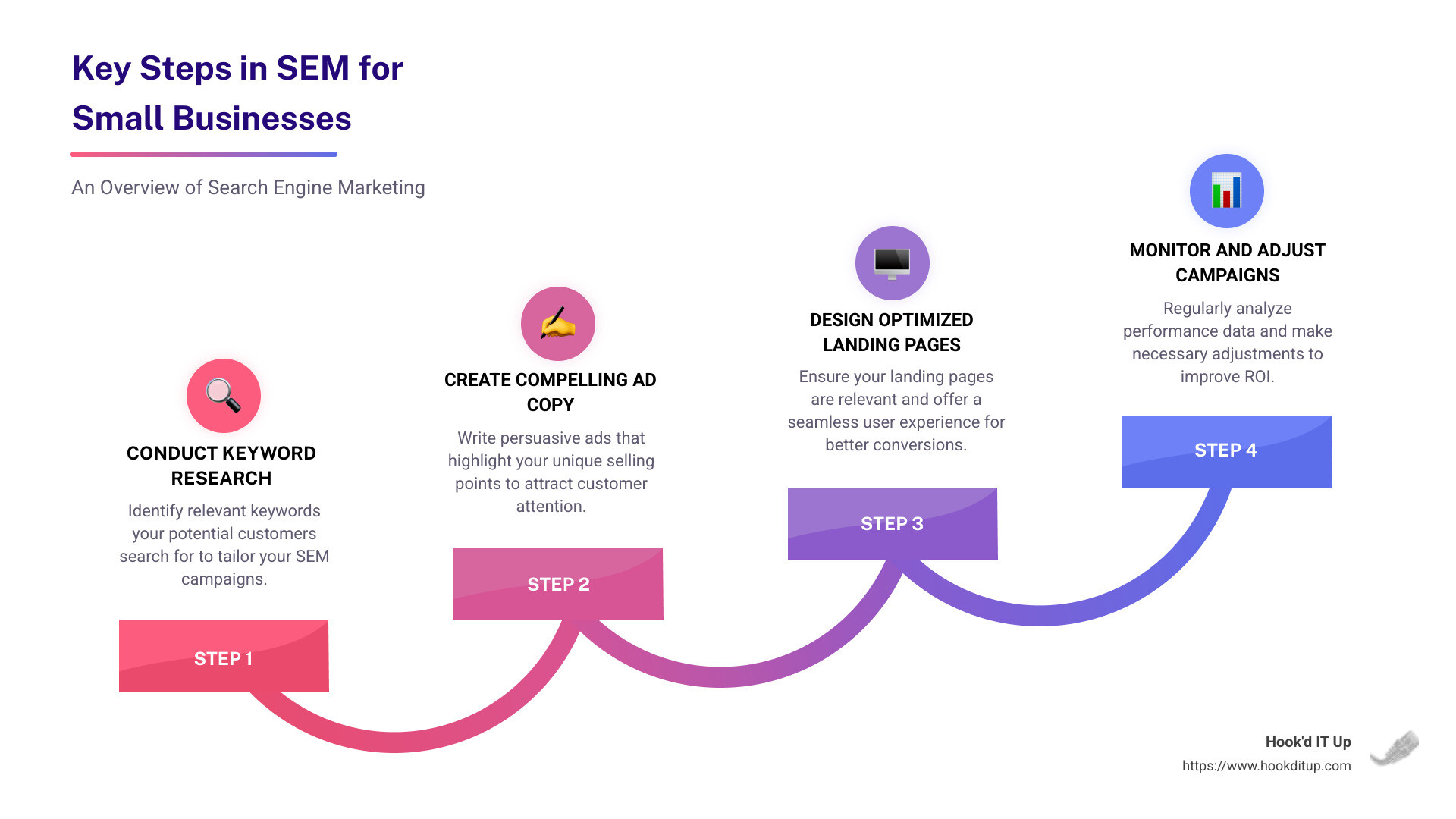
Creating a successful search engine marketing small business strategy involves a few key steps. Let’s explore each one to help you get the best results.
Keyword Research
Think of keyword research as the foundation of your SEM strategy. It’s about finding the right words and phrases that potential customers use when searching for your products or services. Using tools like Google’s Keyword Planner can help you find popular and relevant keywords.
- Start Broad: Begin with broad terms related to your business.
- Narrow Down: Use specific terms that match your niche.
- Analyze Competition: Check what keywords your competitors are using.
This research helps you focus your ads on the most effective keywords, ensuring your ads reach the right audience.
Ad Copy
Once you have your keywords, the next step is crafting compelling ad copy. Your ad copy should grab attention and encourage clicks. Keep it simple and direct.
- Headline: Make it catchy and relevant.
- Description: Highlight the benefits of your product or service.
- Call to Action (CTA): Encourage users to take the next step, like “Buy Now” or “Learn More.”
Effective ad copy can make a big difference in your campaign’s success. It should speak directly to your audience’s needs and interests.
Landing Pages
When users click on your ad, they should land on a page that matches their expectations. This is where landing pages come in. A well-designed landing page can improve your conversion rates.
- Consistency: Ensure the landing page aligns with your ad’s message.
- Clarity: Keep the page simple and focused on a single goal.
- Call to Action: Make it easy for visitors to take the desired action.
A good landing page can turn clicks into customers by providing a seamless experience.
Bid Strategy
Your bid strategy determines how much you’re willing to pay for each click on your ad. It’s important to balance cost and visibility.
- Manual Bidding: You set the maximum cost per click (CPC) manually.
- Automated Bidding: Let the platform optimize your bids for you.
Choosing the right strategy depends on your budget and goals. Regularly reviewing and adjusting bids can help you get the best results without overspending.
By focusing on these elements—keyword research, ad copy, landing pages, and bid strategy—you can craft an effective SEM strategy that boosts your small business’s visibility and attracts more customers. Next, let’s explore some of the top SEM tools available to help you manage and optimize your campaigns.
Top SEM Tools for Small Businesses
When it comes to search engine marketing small business, having the right tools can make all the difference. Let’s look at some of the top SEM tools that can help your small business thrive.
Google Ads
Google Ads is a powerful platform for creating and managing online advertising campaigns. It allows you to display ads on Google’s search results and across its vast network of partner sites.
- Keyword Targeting: Choose specific keywords to target your ideal audience.
- Ad Extensions: Improve your ads with additional information like phone numbers or links.
- Performance Tracking: Monitor how your ads are doing with detailed analytics.
Many small businesses find success with Google Ads because of its broad reach and robust features.
Bing Ads
While Google may dominate the search engine market, Bing Ads offers a valuable opportunity to reach a different audience. Bing Ads can help you tap into users who prefer Bing, Yahoo, and other partner networks.
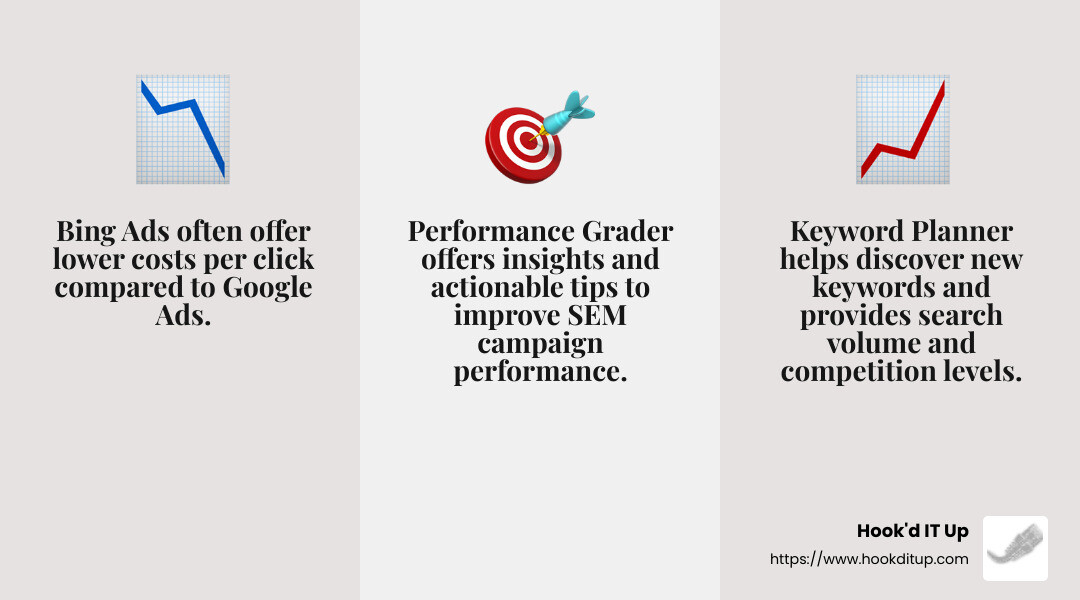
- Cost-Effective: Often, Bing Ads can offer lower costs per click compared to Google.
- Audience Targeting: Reach specific demographics using Bing’s unique targeting options.
- Import from Google Ads: Easily transfer your existing Google Ads campaigns to Bing Ads.
Bing Ads can be a great addition to your SEM strategy, providing access to a wider audience at potentially lower costs.
Keyword Planner
A critical tool for any SEM campaign is the Keyword Planner. This tool helps you find new keywords and estimate how they might perform.
- Search Volume: See how often keywords are searched for.
- Competition Level: Understand how competitive a keyword is.
- Cost Estimates: Get an idea of the costs for targeting specific keywords.
Using Keyword Planner can guide your keyword research, ensuring you target the right terms to reach your audience effectively.
Performance Grader
The Performance Grader is an essential tool for evaluating your SEM campaigns. It provides insights into how well your campaigns are performing and highlights areas for improvement.
- Ad Performance: Assess the effectiveness of your ad copy and targeting.
- Quality Score: Analyze your ads’ quality scores and identify ways to improve.
- Optimization Suggestions: Receive actionable tips to improve your campaign’s performance.
By regularly using a performance grader, you can ensure your SEM efforts are on track and continually improving.
These tools—Google Ads, Bing Ads, Keyword Planner, and Performance Grader—are vital for managing and optimizing your search engine marketing small business campaigns. They help you target the right audience, track your performance, and make data-driven decisions to boost your visibility and success.
Now that you know the tools available, it’s time to focus on optimizing your SEM campaigns for even better results.
Optimizing Your SEM Campaigns
Once you’ve selected the right tools for your search engine marketing small business, the next step is to optimize your campaigns. This involves understanding and leveraging key components like the ad auction, quality score, ad rank, and negative keywords.
Ad Auction
Every time someone searches on Google, an ad auction takes place. Here’s how it works:
- Bid Amount: This is how much you’re willing to pay for a click.
- Quality Score: Google evaluates the relevance of your ads and keywords to the search query.
- Ad Rank: This is determined by multiplying your bid amount by your quality score.
To win the auction, you need a good balance of bid amount and quality score. You don’t always have to be the highest bidder. A higher quality score can lower your costs and improve your ad position.
Quality Score
Your quality score is crucial. It affects both your ad rank and the cost you pay for each click. Here’s what influences it:
- Click-Through Rate (CTR): The ratio of clicks to impressions. A higher CTR means your ad is relevant.
- Ad Relevance: Your ad text should match the keywords you’re targeting.
- Landing Page Experience: Ensure your landing page is relevant and user-friendly.
Improving your quality score can lead to better ad placements and lower costs.
Ad Rank
Your ad rank determines your ad’s position on the search results page. Factors that affect ad rank include:
- Bid Amount: As mentioned, this is how much you’re willing to spend.
- Ad Quality: This includes your quality score.
- Ad Extensions: Using extensions can improve your ad rank by providing more information to users.
To improve your ad rank, focus on enhancing your quality score and using ad extensions effectively.
Negative Keywords
Negative keywords help you refine your audience by excluding certain search terms. This ensures your ads only appear for relevant searches.
- Identify Irrelevant Searches: Look for terms that don’t align with your business goals.
- Add as Negative Keywords: Use Google Ads to add these terms to your campaign.
- Monitor and Adjust: Regularly review search terms reports to update your negative keywords list.
By using negative keywords, you can reduce wasted spend and improve your ad performance.
These strategies—understanding the ad auction, improving your quality score, optimizing your ad rank, and using negative keywords—are essential for fine-tuning your SEM campaigns. They help ensure your ads reach the right audience, at the right time, and at the right cost.
With these optimizations in place, let’s address some common questions about SEM for small businesses.
Frequently Asked Questions about Search Engine Marketing Small Business
What is the difference between SEO and SEM?
SEO (Search Engine Optimization) and SEM (Search Engine Marketing) are both strategies to increase visibility on search engines, but they operate differently.
-
SEO focuses on improving your website’s organic search rankings. This means optimizing your site so that search engines can find it easily without paid ads. Techniques include using relevant keywords, creating high-quality content, and ensuring your website is user-friendly.
-
SEM, on the other hand, involves paid search strategies. This includes Pay-Per-Click (PPC) ads where you pay for your site to appear at the top of search results. SEM is about getting immediate visibility by bidding on keywords.
While SEO builds long-term organic traffic, SEM provides quick visibility and can be especially useful for small businesses looking to boost their presence quickly.
How can SEM benefit my small business?
Search engine marketing small business strategies can offer several benefits:
-
Increased Visibility: SEM can place your business at the top of search results, making it more visible to potential customers.
-
Customer Leads: By targeting specific keywords, SEM can attract more qualified leads who are likely interested in your products or services.
-
Conversions: With the right ad copy and landing pages, SEM can lead to higher conversion rates, turning visitors into customers.
A well-crafted SEM campaign can help small businesses compete with larger companies by ensuring they are seen by the right audience at the right time.
What are some common SEM mistakes to avoid?
While SEM can be powerful, there are pitfalls that small businesses should avoid to ensure success:
-
Keyword Selection: Choosing the wrong keywords can lead to irrelevant traffic. Use tools like Google Ads Keyword Planner to find the most effective keywords for your business.
-
Ad Copy: Poorly written ad copy can result in low click-through rates. Make sure your ads are clear, engaging, and relevant to the searcher’s intent.
-
Budget Allocation: Overspending or underspending can both be problematic. Set a realistic budget and adjust based on performance metrics. Monitor your campaigns regularly to ensure you’re getting the best return on investment.
By avoiding these common mistakes, small businesses can maximize the effectiveness of their SEM campaigns and achieve better results.
Conclusion
At Hook’d IT Up, we understand the challenges small businesses face in today’s digital marketplace. Located in Heber City, we specialize in providing comprehensive digital marketing solutions that empower businesses to shine online. Our focus on search engine marketing small business strategies helps you increase visibility, attract customer leads, and boost conversions.
Our unique approach combines cutting-edge software with expert knowledge in SEM, SEO, and online reputation management. This ensures a seamless experience for managing your marketing efforts. With our all-in-one dashboard, you can track campaigns, manage social media, and engage with customers effortlessly.
Our clients have seen remarkable results. For example, one client noted, “Since hiring Hook’d IT Up, our internet traffic and customer inquiries have risen dramatically.” This is a testament to our commitment to your success.
Ready to lift your business visibility? Find how our search engine marketing services can transform your online presence. Let us help you work on your business, so you can work in it!
